Promote Yourself: Your Author Website
February 17, 2026
How to Create an Author Website (With Great Author Website Examples to Inspire You)
As an author, having a website is a must. It supports your author branding, connects you with your readers, and helps you sell more books. But what sets great author websites apart from average ones? The best author websites go beyond the basics and provide visitors with an engaging and one-of-a-kind experience.
Never built a website before? No problem! Our simple-to-follow guide shows you step-by-step how to create an author website, as well as our recommended author website builders. Plus, we’re sharing some of our favorite standout author website examples to help get you started.
How to Create an Author Website (A 6-Step Guide)
Step 1: Choose Your Domain Name
Securing your author website domain name is one of the most important things you can do when building an author website. For a relatively small fee (typically around $20 per year), you can purchase a domain that allows fans and future readers to find your work and helps establish your credibility. Your domain name should be easy to remember, evergreen, and reflect your author brand. We recommend buying a domain that is simply yourname.com, if it is available. If not, try one of these alternate options:
- yournameauthor.com
- yournamewriter.com
- yourname books.com
Step 2: Prepare Your Materials
The best author websites include the following elements:
- Author bio
- Contact information
- Social media profile links
- Catalog of books (and links for purchasing)
- Reviews
- Blurbs
- Blog
- Email list signup
Before you start building an author website, make sure you have everything you need to create these pages, including images (book cover art, headshots, etc.), book descriptions, press clips, and retail platform links.
Step 3: Choose Your Website Builder
There are many author website builders out there, so when deciding which one to use, review factors including ease of use, customization options, cost, and quality. Our top picks for website builders that make it easy to create an author website are BookLaunch.io and BookBub. Both of these platforms make it simple for indie authors to create beautiful, professional websites that support their marketing efforts.
Other options for author website builders:
- WordPress
- Squarespace
- Wix
- Shopify
- Site123
- Duda
- Ucraft
- Weebly
- Pixpa
- Dorik
Step 4: Design Your Site & Add Content
Using one of the provided templates from your chosen author website builder, you can start creating your author website with drag and drop tools that allow you to place images and text in an easy-to-navigate layout.
Tips for a Top-Notch Author Website Design:
- Include a featured banner to show what you’re currently promoting, whether it’s a new release, an upcoming book tour, or a freebie offer.
- Make your book listing page as engaging as possible by incorporating high-resolution cover images, review excerpts, and links to all major retailers.
- Create an eye-catching email sign-up form to collect contact information for your email marketing efforts.
- Look at the websites of your favorite authors (or any of the author website examples below) for ideas and inspiration.
- Don’t forget to optimize your site for visibility in search engines. This is especially important for your blog writing.
- Use Google Analytics to gain insight into the demographics of people visiting your website, and keep this in mind when designing your site.
- Always include a simple call to action. What do you want your website visitors to do? Direct them to buy your book, sign up for your newsletter, or leave a review.
Step 5: Set Up an Author Email Newsletter
Author newsletters are one of the best ways to create and maintain a relationship with your readers and fans. Don’t let your website visitors leave without getting their email address to stay in contact. Capture this information by offering a lead magnet such as a free offer, resource, or giveaway as an incentive. Select a user-friendly email service provider (such as MailerLite or Constant Contact) that can help you create this capture form and integrate it into your website.
Step 6: Update Your Author Website Regularly
The best author websites feature new, relevant content that keeps fans coming back for more. Use the following checklist to help keep your website content feeling fresh:
- Weekly blog posts
- Event announcements
- Upcoming releases
- Cover reveals
- Book trailer videos
- New reader reviews (from Goodreads, Amazon, etc.)
- Mentions in the news
- Recent author interviews
Great Author Websites: Examples to Inspire
Now that you have your playbook for how to create an author website, let’s explore what makes an author website truly stand out. The following author website examples combine beautiful design, engaging features, and an authentic experience that connects the authors with their fans.
Bella Andre (bellaandre.com)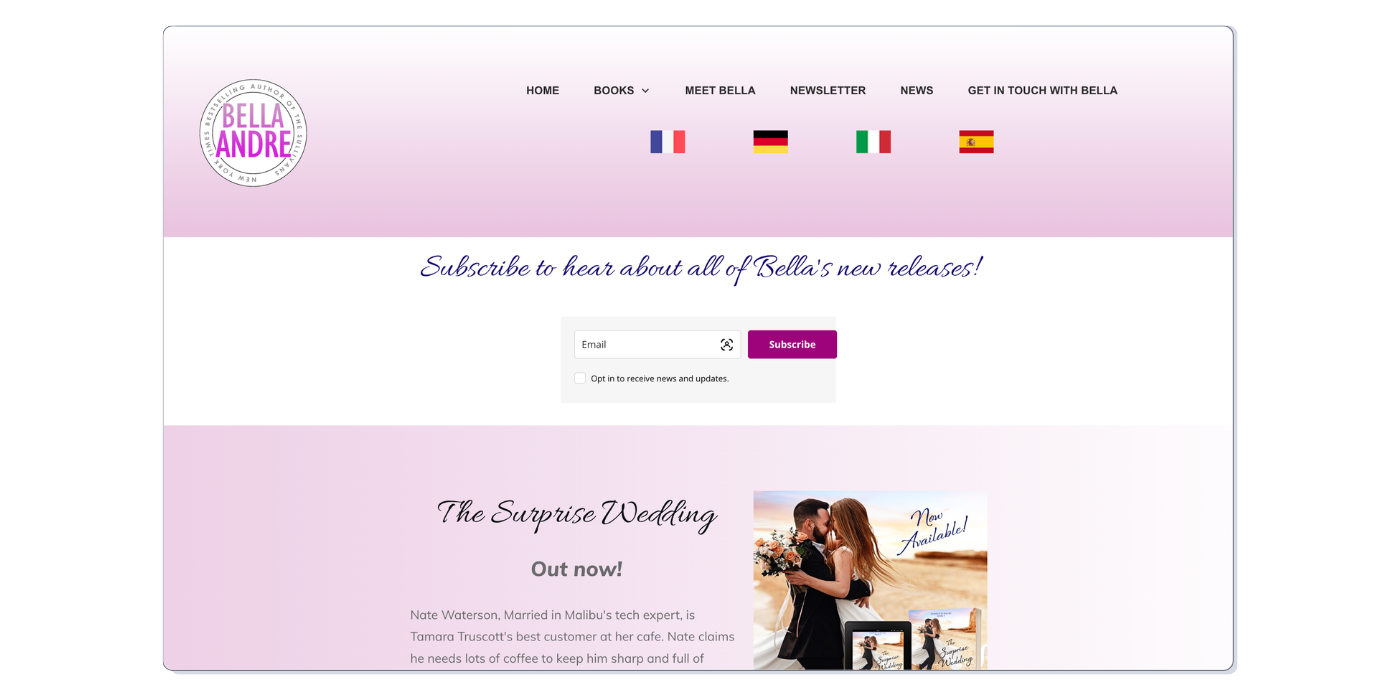
Why it works: Easy-to-navigate and visually appealing, this website features plenty of call-to-action buttons and makes purchasing Andre’s wide array of published titles simple.
How you can use it as inspiration: Choose a color scheme that fits your genre and ensure the layout of your author website is intuitive.
Brit Bennett (britbennett.com)
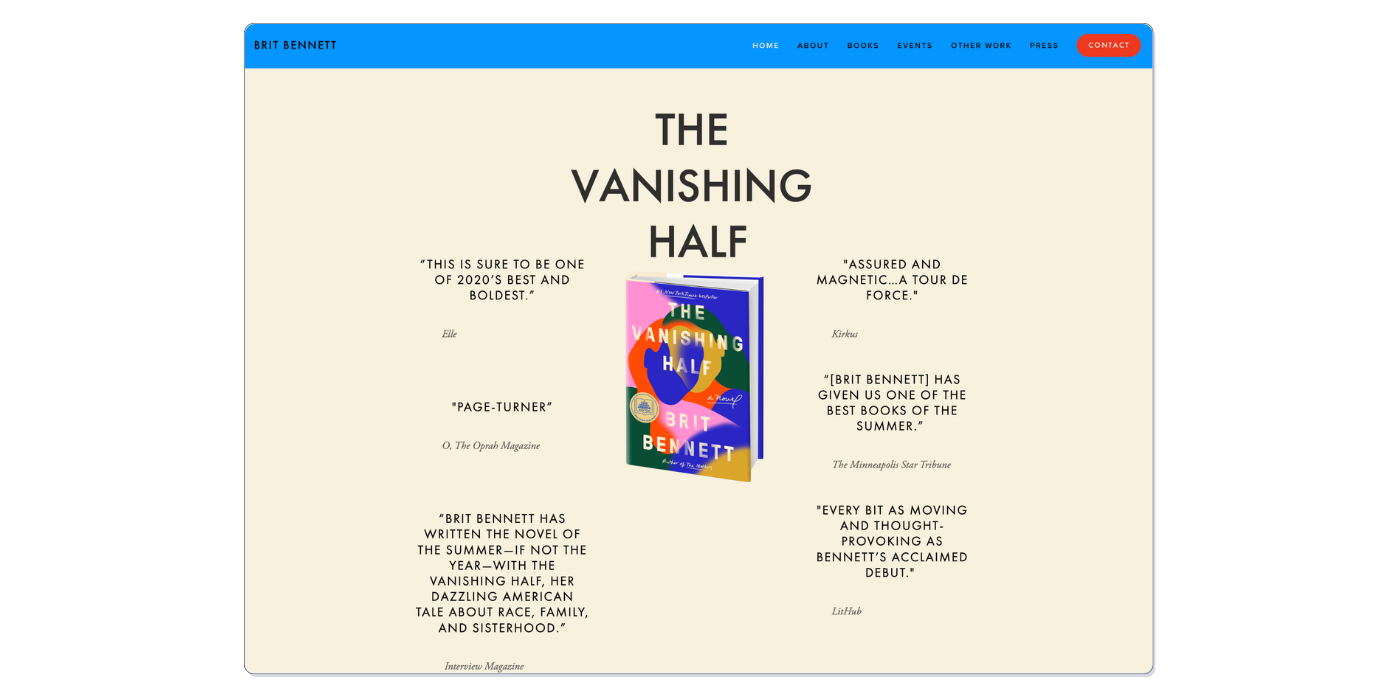
Why it works: Brit Bennett’s author website showcases her hit novel on the homepage and includes clean and clear reviews for endorsement.
How you can use it as inspiration: Don’t underestimate the power of social proof. Use reader reviews and blurbs from fellow authors to persuade site visitors to purchase your books.
Nita Prose (nitaprose.com)
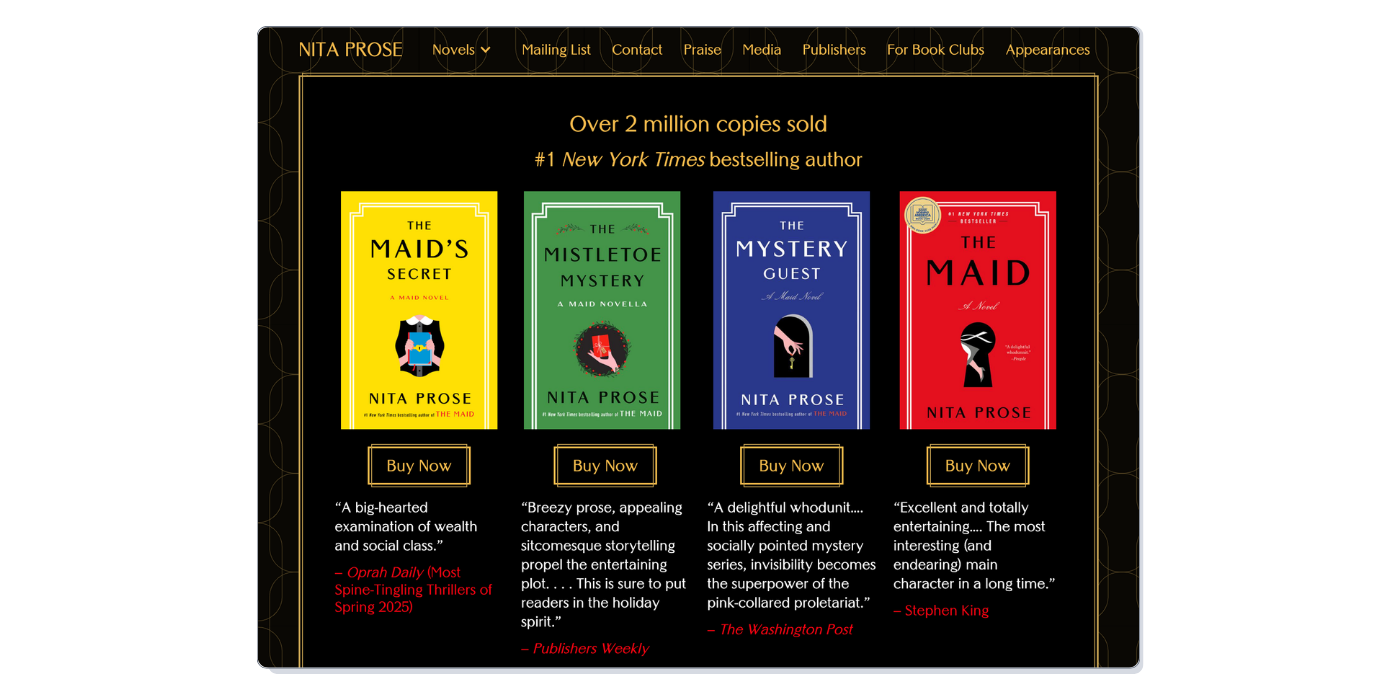
Why it works: The eye-catching dark background makes the featured books pop. The site also offers social proof right at the top, and its header navigation makes it easy for readers to engage in multiple ways (joining the mailing list, checking out the book club, finding upcoming appearances, etc.).
How you can use it as inspiration: Make it simple for readers and fans to connect with you via your website. Engagement opportunities include sharing social media links, offering extra material (such as book club questions), and running contests and giveaways.
James Clear (jamesclear.com)
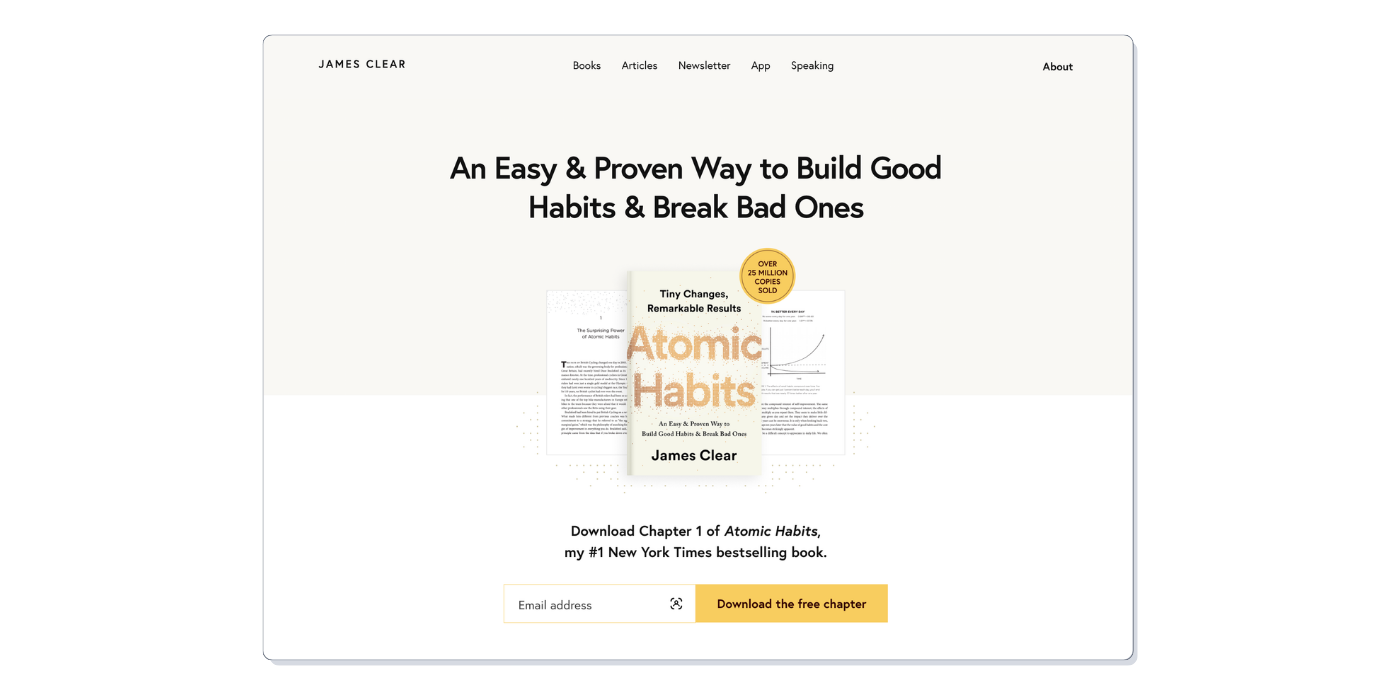
Why it works: This minimalist author website design puts the focus on the content. The use of white space and simple text showcases Clear’s work in a direct, powerful way.
How you can use it as inspiration: You don’t need a fancy or intricate website design to stand out. Make white space your friend and allow your books to shine on your author website. Use strong taglines to support your visuals.
Wrapping Up
Author websites shouldn’t be an afterthought. They are a powerful tool for branding, marketing, and selling your books. Before you’ve even finished your first book, start thinking about what you want your site to convey and what it should look like. Then, get started building an author website using this guide and inspiration from other great author websites.
Editor’s Note: This post was originally written on December 15, 2021. It has been substantially revised as of February 17, 2026.