5 Audiobook Market & Publishing Trends Set to Dominate in 2026
January 12, 2026
5 Audiobook Market & Publishing Trends Set to Dominate in 2026
5 Audiobook Trends Authors Need to Know
The audiobook industry has gone through a massive renaissance in the last decade, thanks to the ubiquity of smartphones and the rapid rise of listening platforms. According to a recent Audio Publishers Association survey, U.S. audiobook sales revenue skyrocketed to $2.22 billion in 2024, an incredible 13% increase over the previous year. By 2030, the audiobook market is expected to reach $13.3 billion in sales, with more than 1.75 billion active users.
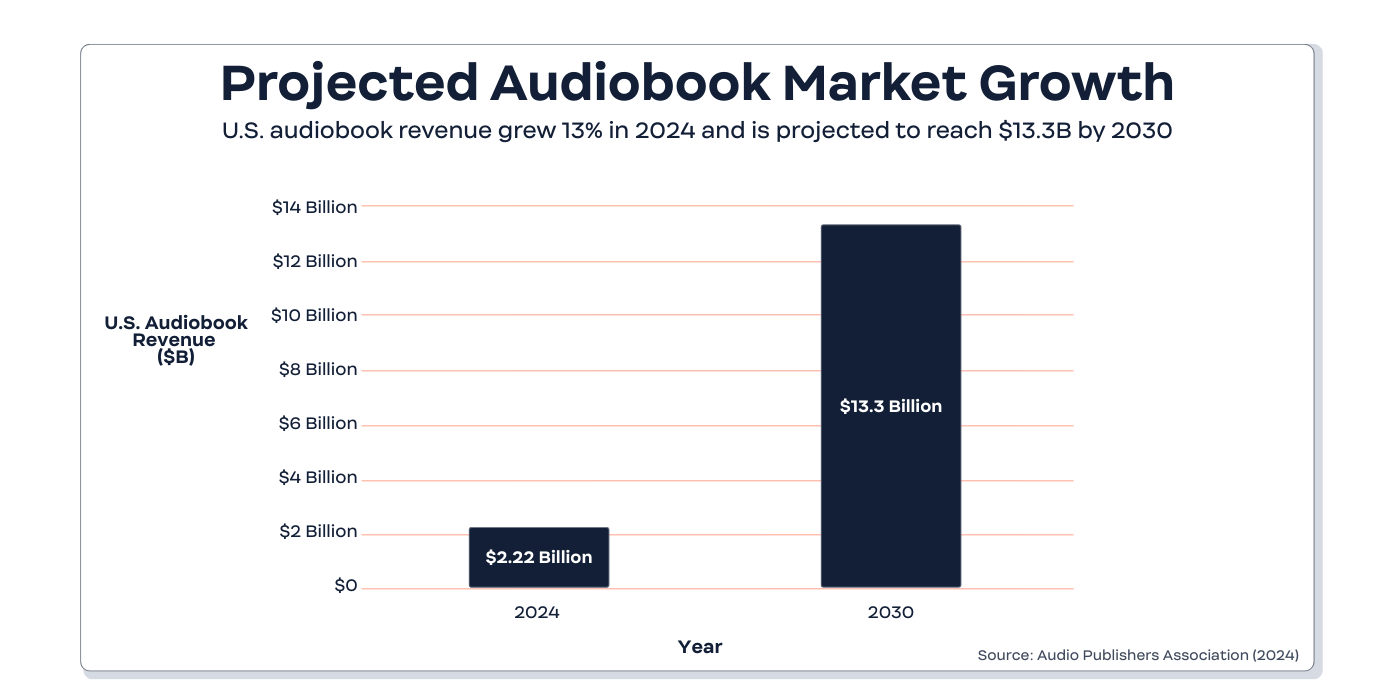
For authors, and indie authors in particular, this unprecedented audiobook growth represents an incredible opportunity. More than ever before, consumers are seeking out audiobooks for on-the-go entertainment. Couple that with the new tools and platforms making audiobook publishing more accessible, and we are poised to see a boom in the audiobook market like never before.
Looking to capitalize on the popularity of audiobooks in 2026? Discover the publishing trends that will dominate the audiobook market in the coming year and learn how to use them to your advantage.
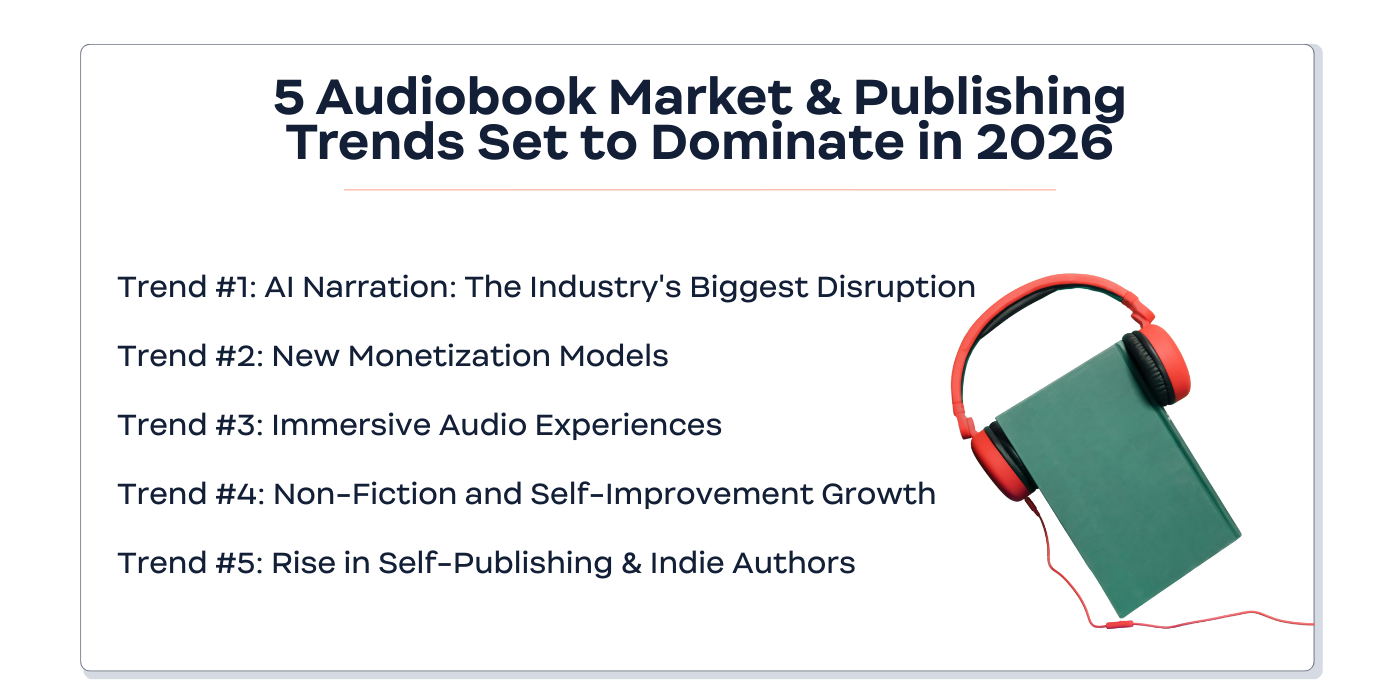
Trend #1: AI Narration: The Industry's Biggest Disruption
There is no trend more talked about in the audiobook industry than AI. As new technologies to create audiobooks emerge, publishers, authors, and consumers alike are trying to find a balance between efficiency and quality.
AI narration in particular is becoming increasingly popular as software evolves, with options for authors to customize voices, pace, tone, inflection, and even accents. AI-narrated audiobooks grew 36% year over year between 2023 and 2025, and they now account for 23% of new releases.
However, as more authors choose AI narration for its convenience and cost effectiveness, there is also pushback, with only 70% of consumers saying they’d be willing to try AI-narrated audiobooks in 2025, compared to 77% in 2023. That’s why audiobook narration services, like the Narrator Marketplace from Author’s Republic—featuring only human professional voice actors —are gaining traction. Authors looking to preserve the unique human element of their stories can use these services to audition narrators and find the perfect voice. With the right narrator on board, audiobooks can convey the emotion and nuance of the story, helping them stand out in a sea of increasingly AI-driven narrations.
Key Takeaway for Authors: Evaluate your audiobook strategy—from genre and listener expectations to budget and production timeline—when deciding on narration.
Trend #2: New Monetization Models
As audiobooks continue to grow in popularity, publishers and distributors are discovering new ways to cash in on this success, which benefits authors, too. Subscription services are one of the most popular monetization models, with 63% of audiobook listeners subscribing to at least one service in 2024. For authors and publishers, distributing audiobooks via subscription services means increased discoverability, wider reach, and more engagement. Whether it’s with a credit-based model (like Audible) or an unlimited model, authors are finding that subscription-based audiobook platforms help reach niche-interest audiences as well as younger listeners who value convenience and variety.
Similar to subscription services, serialized audiobooks and short-form content had a moment in 2025, with even more growth expected in 2026. With serialized storytelling, authors release shorter, “bite-sized” story installments, instead of publishing a full-length audiobook. Authors can monetize serialized content in multiple ways, including as ad-supported audio (similar to podcasts), through membership communities (like Patreon), or via special promotions such as “early access” or bonus episodes.
With new software tools and audiobook publishing platforms making it easier than ever to create content, authors can further monetize their work by promoting directly to listeners through their social media channels, email newsletters, and more. Gone are the days when authors needed an agent and PR firm to ensure success; the 2026 audiobook industry is all about empowering self-published and indie authors to drive their own success.
Key Takeaway for Authors: Distribute as widely as possible to maximize your audiobook earnings. Sell your audiobook via streaming and subscription platforms to create a recurring revenue stream. Experiment with different formats, such as short-form stories, to diversify your reach.
Trend #3: Immersive Audio Experiences
To truly engage listeners, authors today can create fully immersive experiences with their audiobooks. This means incorporating everything from background music to sound effects to multi-voiced performances. In 2026, expect to see (or hear) soundscapes used more frequently to enhance the atmospheric experience of audiobooks, whether it’s a romantic fantasy or suspenseful thriller.
Key Takeaway for Authors: Turn your story into a theatrical experience with immersive audio elements including sound effects, music, and full-cast recordings. Dramatized audiobooks create an emotional connection between your story and the audience, turning casual listeners into avid fans.
Trend #4: Non-Fiction and Self-Improvement Growth
One of the fastest-growing sectors in the audiobook market is non-fiction, specifically self-improvement audiobooks. Why? People who listen to audiobooks crave practical and productive content. A large portion of the audiobook audience is multi-taskers who consume content while commuting, cleaning, or doing other daily tasks. It makes sense, then, that self-help and personal development are among the most popular audiobook categories. To tap into this trend, authors can target non-fiction genres like health and wellness, leadership, motivation, and more. Choosing to narrate your own audiobook is also a great way to build rapport with your audience, leading to increased sales.
Key Takeaway for Authors: Non-fiction writers can attract new listeners and grow revenue by tapping into popular non-fiction sub-genres like business, psychology, and personal development. Because non-fiction ages more slowly than fiction, even backlist titles can benefit from this emerging audiobook trend. Fiction authors, too, can capitalize on the surge of interest in learning-oriented content. By creating bonuses like author Q&As and behind-the-scenes stories, authors can meet reader demand for “real life” content.
Trend #5: Rise in Self-Publishing & Indie Authors
In 2026, you’ll find more self-published authors than ever before recording audiobooks – and profiting from it! The audiobook market is the fastest-growing segment in publishing, and with advances in audiobook creation, expanding monetization opportunities, and easy access to wide distribution, new and diverse voices are coming to the table – chief among them, indie authors.
Key Takeaway for Authors: Just because you’re a self-published or independent author doesn’t mean you can’t succeed in the audiobook industry. There has never been a better time for indie authors to take on the audiobook market and sell globally across a wide range of platforms.
The Bottom Line: Key Publishing Trends for Audiobook Growth in 2026
The audiobook industry is transforming at a rapid pace. For authors looking to stay ahead of the curve, understanding current audiobook trends and incorporating them into upcoming marketing strategies is essential. As with all publishing trends, it is important for authors to consider what to embrace and prioritize in order to take their audiobooks to the next level in 2026.
Ready to elevate your audiobook game?